Surface Acoustic Wave Nebulization
|
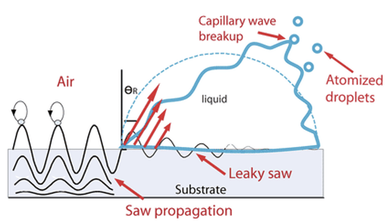
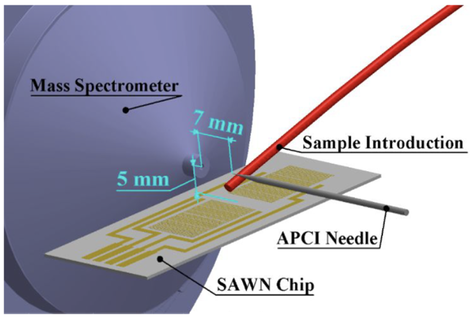
Surface acoustic waves are formed by applying alternating current to electrodes that are embedded in a piezoelectric substrate. The propagation of these waves at a certain power can overcome the surface tension of a liquid droplet and induce nebulization and allows it to be seen on a mass spectrometer. To enhance signal, we couple our SAWN device with a high voltage atmospheric pressure chemical ionization (APCI) needle. |
|
This ionization source is more generic than ESI as it provides more consistent analysis of non polar analytes. If you want to read more about our SAWN-APCI setup, check out Linxia Song's on Surface Acoustic Wave Nebulization with Atmospheric Pressure Chemical Ionization for Enhanced Ion Signal published in Analytical Chemistry. |
|
Surface Acoustic Wave Lysis
|
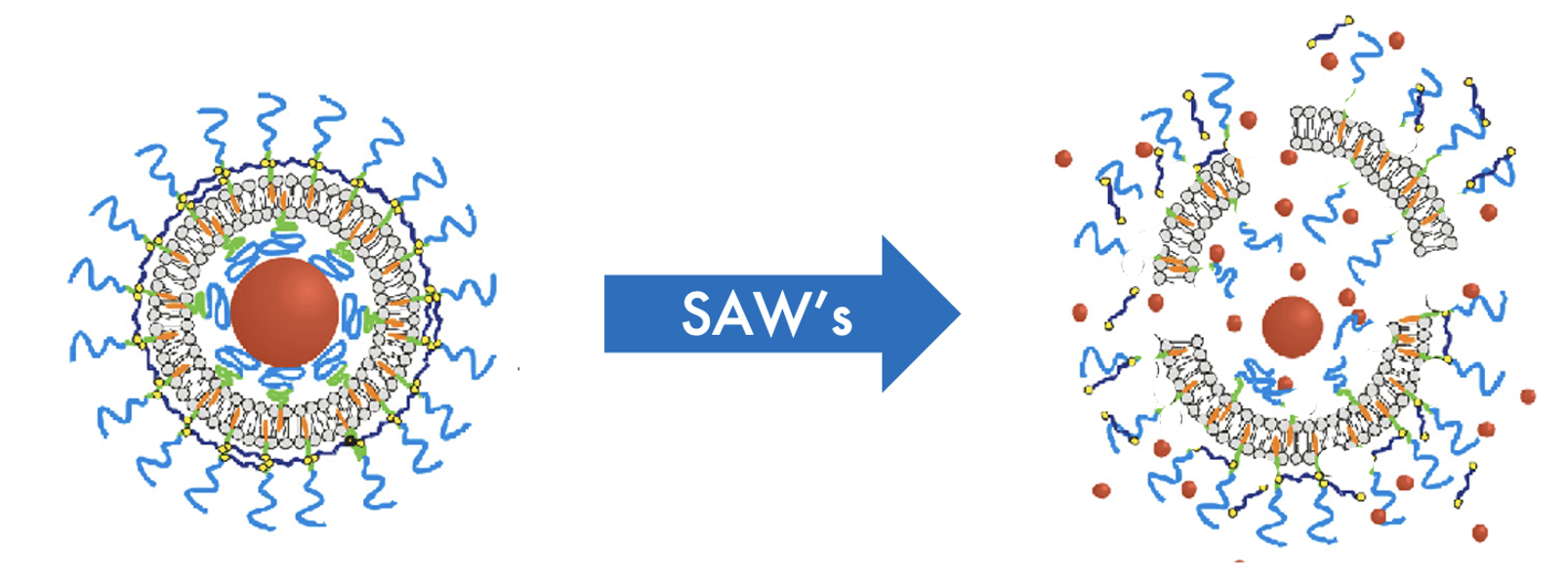
Currently, we are using surface acoustic wave technology to attempt to lyse biological samples like liposomes. If you have any questions about this project, you can contact Ashton Taylor. |
